Voiceenhancer Explore voice tools
English

Plain-language guide

What does voice enhancer meaning reveal about audio?

Voice enhancer meaning is simple: it describes processing that makes spoken or sung audio clearer, more balanced, or easier to hear. The result depends on the original recording, the type of noise, and the amount of processing applied.

Related guides

Continue with a practical voice topic

These related pages explain where voice enhancement fits in real recording workflows, from online tools to podcasts and artificial intelligence.

Limits and edges

What a voice enhancer cannot do

Enhancement can improve an existing signal, but it is not a time machine for damaged or missing audio. Knowing the boundaries helps you choose sensible settings and expectations.

It cannot recover words that were never captured

If speech is fully covered by a loud sound, clipped beyond recognition, or absent from the recording, processing cannot reliably recreate the missing words.

Workaround

Use a closer microphone, record another take, or provide a transcript when the content matters.
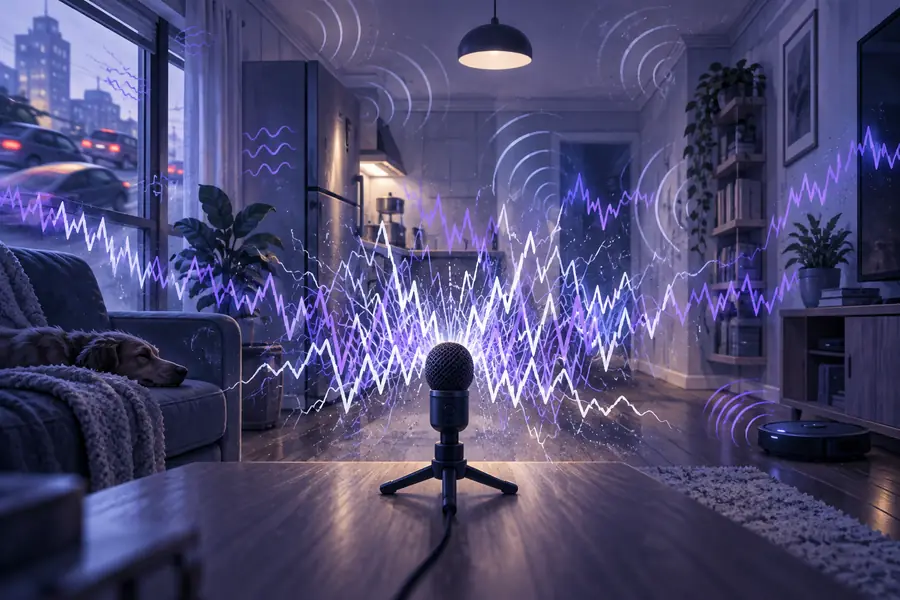
It cannot remove every kind of noise

Steady hum and mild room noise are often easier to reduce than overlapping speech, traffic bursts, music, or sudden handling sounds.

Workaround

Move away from the noise source and use directional microphone placement before applying enhancement.

It cannot make every voice sound natural

Strong processing may create metallic edges, pumping volume, muffled consonants, or an overly polished character.

Workaround

Compare the processed clip with the original and reduce the effect when clarity improves but natural tone declines.

It cannot replace good recording technique

A voice enhancer works after capture. It does not fix poor microphone distance, bad room acoustics, weak delivery, or inconsistent speaking levels by itself.

Workaround

Treat enhancement as the finishing stage after improving placement, gain, and the recording environment.

The signal path

How voice enhancement works

Most voice enhancement follows a short chain: inspect the recording, separate useful speech from distractions, then shape the result for clearer listening.

  1. 1

    Analyze the recording

    The process identifies speech patterns, loudness changes, frequency balance, pauses, and competing sounds. This establishes what can be improved without guessing at the speaker’s intent.

  2. 2

    Reduce distractions

    Unwanted hum, hiss, room reflections, or inconsistent background sound may be softened. The aim is not silence; it is a cleaner relationship between the voice and everything around it.

  3. 3

    Balance the voice

    Volume, tone, and intelligibility can be adjusted so important consonants remain present and the voice sits more consistently from beginning to end.

  4. 4

    Review the trade-offs

    A useful result still sounds like the same person. Listen for harshness, pumping, clipped peaks, and lost ambience before accepting the processed version.

Audio reference points

Three numbers that explain the trade-offs

These reference points are not product promises. They show why an enhancer must balance frequency coverage, loudness, and headroom rather than simply making everything louder.

Approximate lower edge of the commonly cited human hearing range.
20 Hz
Approximate upper edge of the commonly cited human hearing range.
20 kHz
Digital full-scale ceiling; peaks above it can clip in a digital signal.
0 dBFS

A listening comparison

Before and after: clearer is not always louder

A useful comparison keeps the speaker’s identity and intent intact while making words easier to follow. The after version should be judged for intelligibility and natural tone, not volume alone.

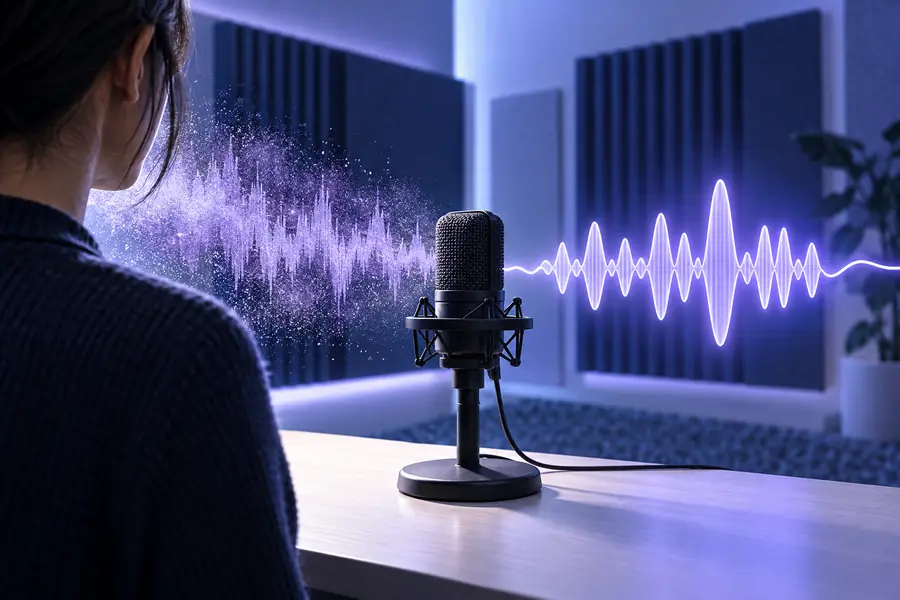
Illustration of an untreated voice recording with surrounding audio distractions Untreated recording
Illustration of a processed voice recording with clearer speech focus Enhanced recording
Compare words, tone, and background balance at the same listening level.

Side-by-side view

Voice enhancement versus the original recording

The differences below describe the usual purpose of enhancement, not a guarantee that every recording will change in the same way.

Original recording
Enhanced recording

Speech presence

Original recording

May compete with room sound, music, or nearby noise.

Enhanced recording

Speech is given a clearer place in the overall mix.

Background sound

Original recording

Ambient detail and unwanted distractions remain together.

Enhanced recording

Some steady or predictable distractions may be reduced.

Loudness consistency

Original recording

Words may vary noticeably between phrases.

Enhanced recording

Level changes may be smoothed for easier listening.

Voice character

Original recording

Shows the speaker’s untreated tone and natural room.

Enhanced recording

Keeps the source character when processing is moderate.

Missing information

Original recording

Contains only what the microphone captured.

Enhanced recording

Still cannot reliably recreate words or sounds that were never recorded.

Room acoustics

Original recording

Reflections can make speech sound distant or blurred.

Enhanced recording

Reflections may be softened, but a difficult room can remain audible.

Risk of artifacts

Original recording

Has no processing artifacts from enhancement.

Enhanced recording

Too much processing can add pumping, harshness, or an artificial texture.

Where it helps

Who benefits from a voice enhancer?

The best use cases start with a real communication problem: people need to understand the speaker without losing the character of the recording.

Video creators

A presenter records a lesson, review, or short video in a room with mild echo or changing background sound.

Clearer speech helps viewers follow the message without requiring the creator to rerecord every line.

voice enhancer online free

Podcast hosts

A host edits a conversation with different microphones, room tones, or uneven speaking levels.

A more consistent vocal balance makes the discussion easier to follow from one speaker to the next.

podcast voice enhancer

Singers and performers

A performer wants a vocal take that remains intelligible while preserving expression, dynamics, and personal tone.

Moderate processing can support presence without turning a performance into a flat or synthetic track.

voice enhancer for singing

Remote interviewers

An interview includes small differences in microphone distance and background conditions between participants.

Speech-focused cleanup can make important answers easier to hear during editing and review.

ai voice enhancer

Make the idea practical

Turn a difficult recording into a clearer listening experience

Now that the voice enhancer meaning is clear, the useful next step is to judge your own recording by its communication goal. Start with a clip where the words are present but competing noise, uneven level, or room sound makes them harder to follow. Keep the original available, compare at a matched loudness, and prefer the version that sounds clearer without obvious artifacts.

Try voice enhancement
  • Improve clarity without changing the speaker’s identity
  • Compare the processed result with the original
  • Use moderate processing when natural tone matters

Common questions

Voice enhancer meaning: frequently asked questions

A voice enhancer is audio processing designed to make speech or singing easier to hear and understand. It may adjust loudness, tone, noise balance, or other characteristics of an existing recording.

It can bring the intended voice forward by reducing some distractions and balancing the signal. The exact result depends on the source, the type of noise, and how strongly the processing is applied.

No. A voice enhancer generally aims to improve clarity while preserving the speaker’s identity and character. A voice changer is intended to transform the perceived identity, pitch, or style of a voice.

Usually not. Mild, steady noise may be reduced, but overlapping speech, sudden sounds, severe echo, and clipped audio can remain difficult to separate from the voice.

It may help balance or raise the perceived level, but louder does not automatically mean clearer. The recording still needs enough usable speech information, and excessive gain can expose noise or create clipping.

Use one when the words are already present but are difficult to follow because of uneven volume, mild noise, room sound, or an unbalanced recording. If the source is badly damaged, rerecording or editing around the problem may be more reliable.

Explore voice tools
Explore voice tools